Skip to content
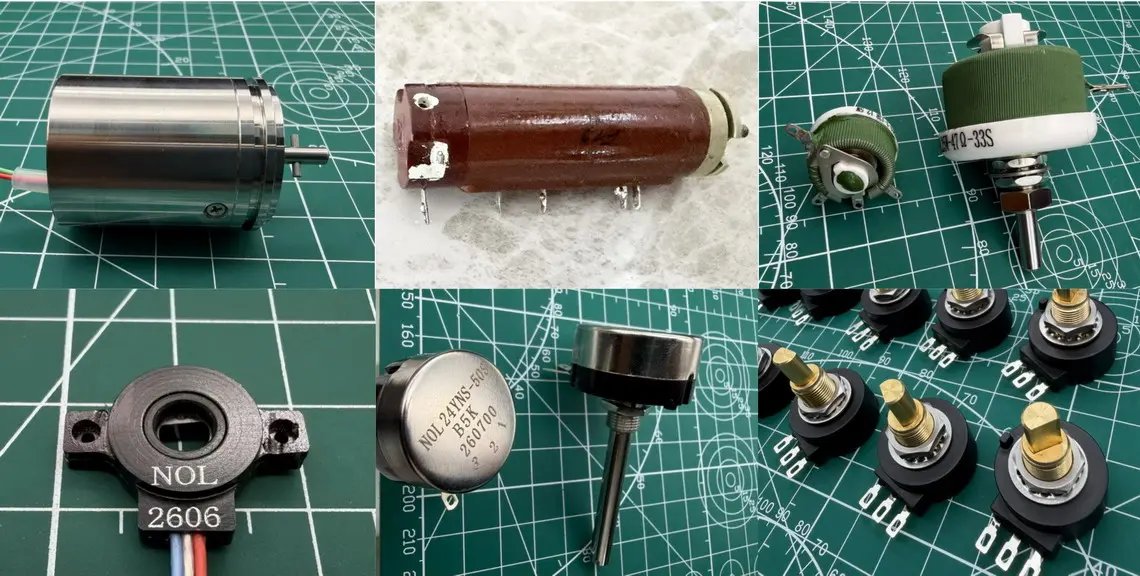
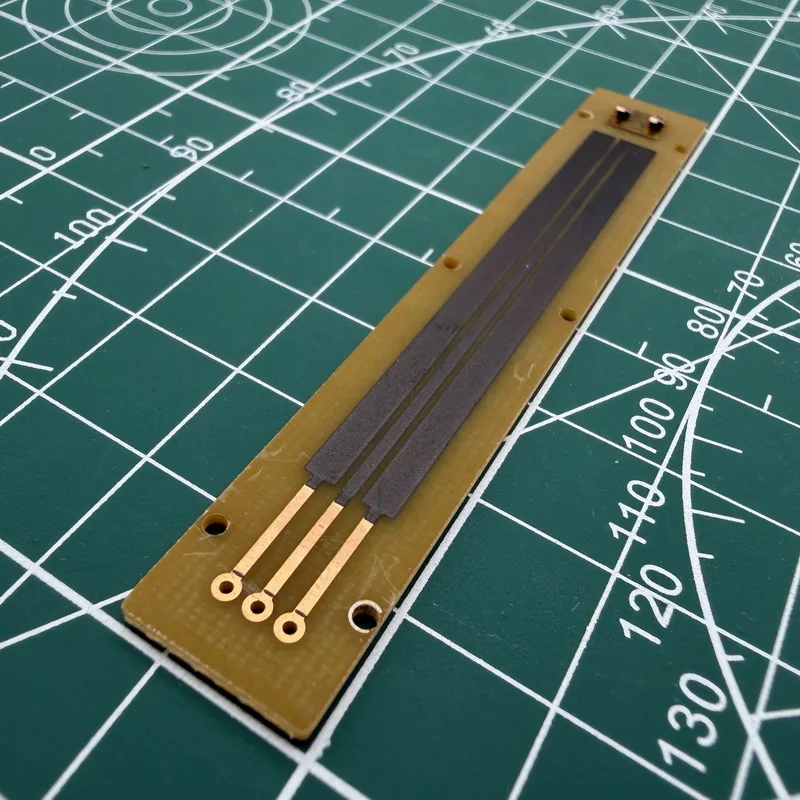
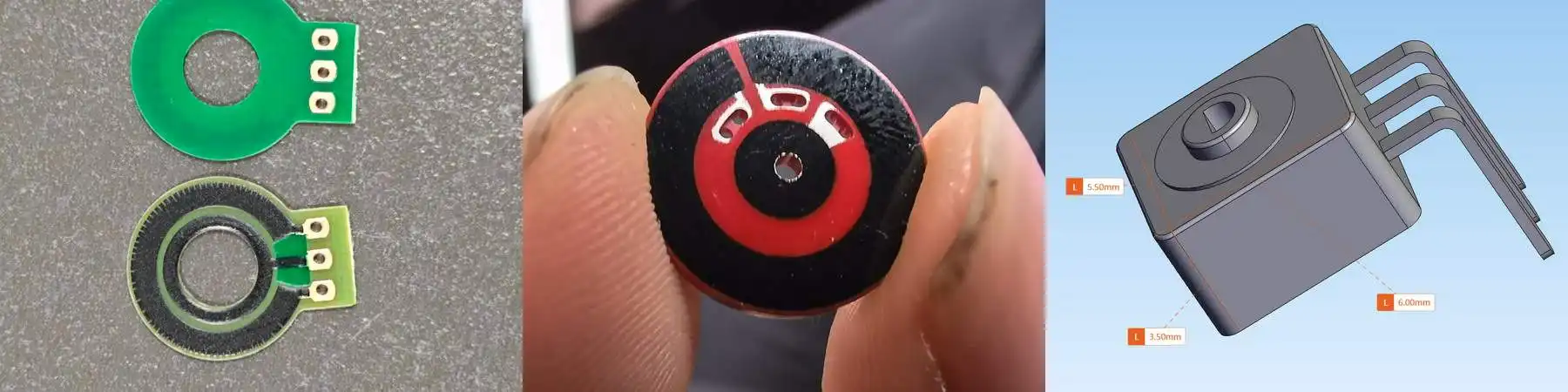
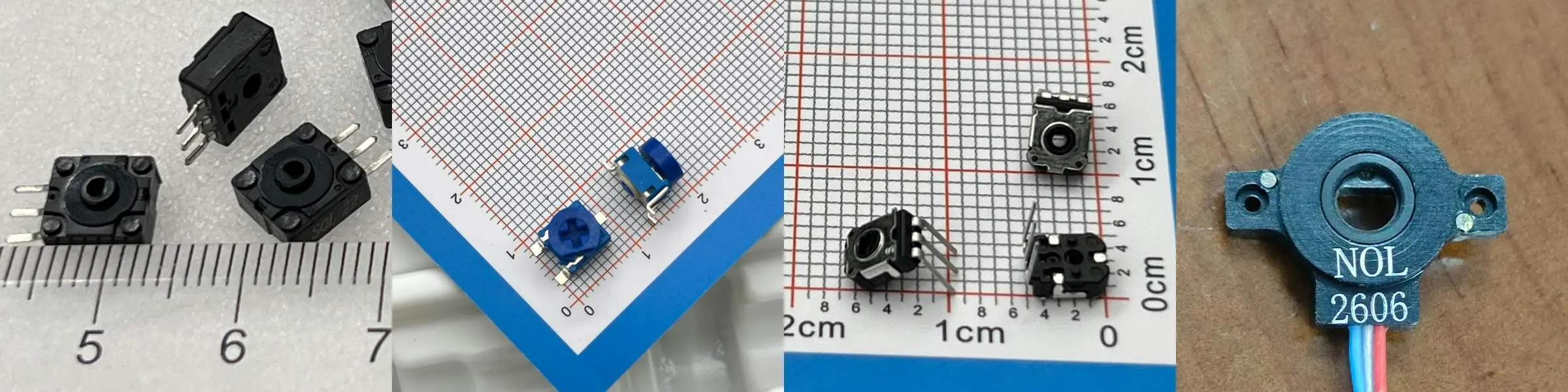
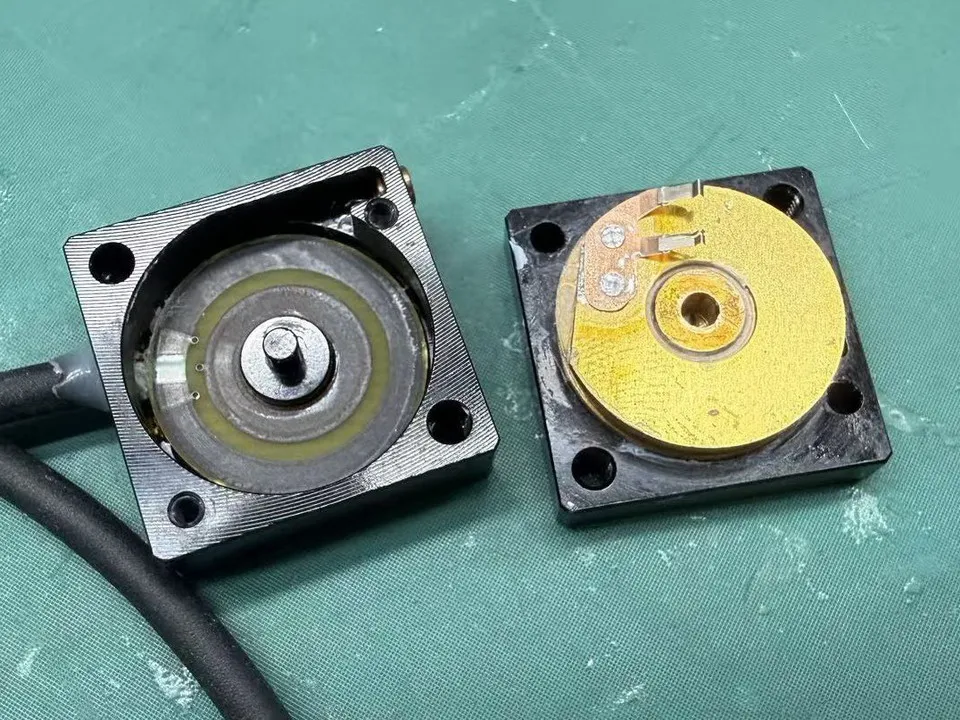
The image above shows several common potentiometer housings. They differ not only in material but also in manufacturing process. I will separate them and explain each one later in the article.
Introduction
I have delayed this post for two months. I actually planned to organize it in July, but the summer vacation got in the way.
It started with a client who reminded me three times during a small-batch replacement project that we should consider using a machined Bakelite housing for a wirewound potentiometer to reduce the cost.
Personally, I had never paid much attention to housings. Although the housing is important when electromagnetic interference, corrosion resistance, waterproofing, and similar requirements are involved, most of the performance requested by customers is still determined by the internal components.
I treated this article as an opportunity to study the subject again. After organizing the information, I found that there was indeed more depth to it than I had expected. Or, to put it another way, without an evaluation by our costing colleagues, it is genuinely difficult to say which option will be more expensive.
Common Potentiometer Housing Materials and Manufacturing Processes
Material, manufacturing process, and production quantity have a symbiotic relationship. They are not completely independent of one another, so they have to be discussed together.
| Housing Type | Common Materials | Main Characteristics | Common Limitations or Cost Factors |
|---|---|---|---|
| Machined metal housing | Anodized aluminum, stainless steel | Suitable for small batches and complex structures; dimensions can be adjusted relatively easily | Cost mainly comes from turning, drilling, threading, and surface-treatment time |
| Stamped metal housing | Stainless steel sheet and other sheet metals | Suitable for mass production, with high production efficiency per piece | Requires stamping tooling and is unsuitable for very small custom orders |
| Injection-molded housing | ABS, PI (polyimide), and other engineering plastics | Suitable for mass production, with good dimensional and structural consistency | Requires an injection mold; the cost advantage becomes less obvious for thick-walled parts or small quantities |
| Bakelite housing | Phenolic resin | Electrically insulating and heat-resistant; commonly found in traditional electrical products | Compression molding can be considered, but small-batch machining is actually quite expensive |
| Ceramic and other special insulating housings | Ceramic, clay-based ceramic, and similar materials | Mainly used for wirewound potentiometers, high-temperature environments, or special insulation structures | Forming and firing are required; dimensional shrinkage, secondary machining, and material brittleness must all be considered |
The same material can have very different costs when processed in different ways.
For example, the material used for a relatively simple stainless steel cylinder may not be expensive. However, if the part requires internal turning, threading, terminal holes, and surface treatment, most of the final cost comes from the machining time rather than that small piece of stainless steel.
The opposite is also true. ABS looks inexpensive, but if no existing injection mold is available, the material must be purchased separately and processed in a small batch. The final cost may actually be higher. Even though ABS can be machined, machining provides little cost advantage for small housings with complex structures and thin walls.
Machined Metal Housings
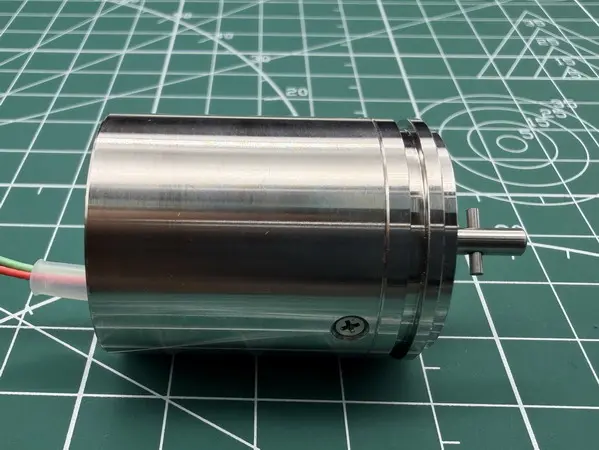
The image above shows an encoder used in medical equipment.
Machined metal housings are commonly used for industrial potentiometers, precision potentiometers, and certain small-batch custom products.
The advantages of stainless steel are straightforward: it is strong, corrosion-resistant, mechanically robust, and can provide a certain degree of electromagnetic shielding. It is usually a reliable choice for applications with demanding mechanical environments.
However, stainless steel is not easy to machine, as mentioned above.
For this reason, we sometimes propose replacing stainless steel with anodized aluminum alloy.
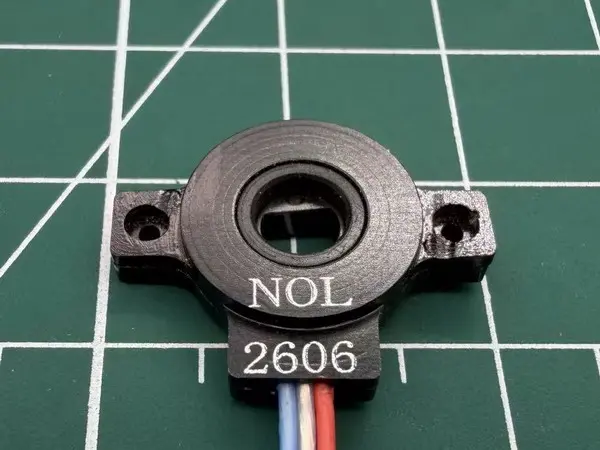
The image above shows a miniature contact sensor used in an aircraft.
Aluminum alloy is generally easier to machine and is also lighter. When the operating environment and mechanical structure permit, it may indeed reduce the cost.
However, the two materials cannot be substituted based only on appearance and dimensions. At a minimum, we still need to confirm:
- How much mechanical force the housing must withstand;
- Whether the housing needs to provide electromagnetic shielding.
If these basic conditions cannot be satisfied, aluminum alloy may not be a good choice even if it is less expensive to machine.
Stamped Metal Housings
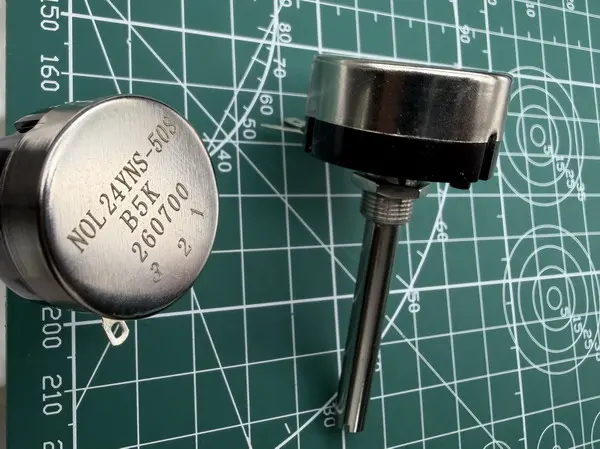
The image above shows a potentiometer used in industrial equipment.
Many conventional rotary potentiometers use stamped metal housings.
This type of housing is suitable for mass production. Once the tooling has been completed, the production efficiency per piece is high, and the consistency of the housings is generally good.
However, a stamped housing is inexpensive only under certain conditions:
- The production quantity is large enough;
- The material thickness and structure are suitable for stamping;
- Subsequent bending, riveting, and surface treatment are not overly complicated.
If only a few dozen discontinued potentiometers need to be reproduced, the cost of creating new deep-drawing, punching, and bending tooling may be much higher than the cost of the housings themselves.
In addition, the sealing performance of a stamped metal housing is not determined by the metal shell alone.
The terminal exit position, the fit between the terminals and insulating parts, the treatment of housing seams, and whether potting is required will all affect the final sealing performance.
Therefore, when reproducing a potentiometer with sealing requirements, we may recommend modifying the terminal structure even if the external housing dimensions can remain unchanged.
This is simply to establish a more suitable sealing structure for the new manufacturing process.
Injection-Molded and Overmolded Housings
[Insert image: Injection-molded plastic housing]
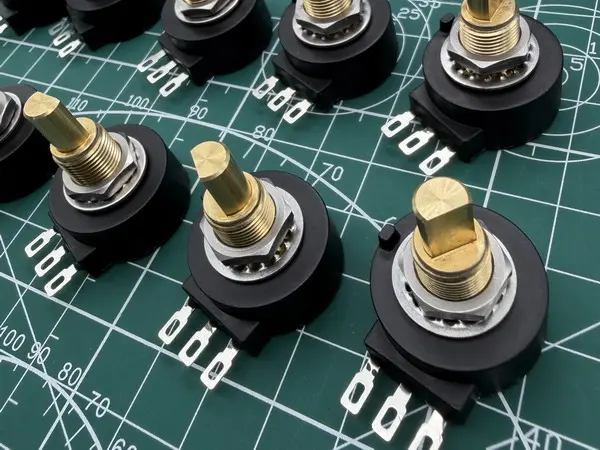
Injection-molded housings are very common in modern potentiometers.
For larger production quantities, injection molding can provide relatively stable dimensions and a low unit cost. Terminals, bushings, and other metal parts can also be used as inserts and molded together with the plastic.
However, injection molding has some obvious limitations:
- Tooling is required upfront;
- A structural change may require a mold modification;
- Small orders cannot easily absorb the tooling cost;
- Insert positioning and sealing must be considered during mold design.
For example, the two potentiometers in the image above have almost identical main structures. However, their locating points are arranged symmetrically, so the mold still has to be modified.
Therefore, injection-molded housings are suitable for stable, long-term mass production, but they are not necessarily suitable for reproducing products in very small quantities.
Bakelite Housings
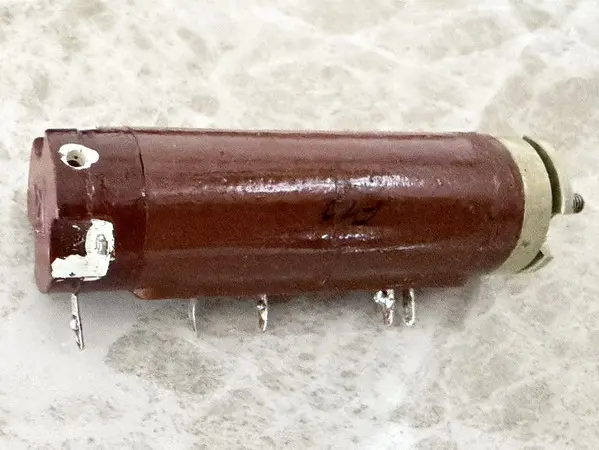
Bakelite generally refers to a thermosetting material based on phenolic resin.
Many older potentiometers, switches, and electrical insulating parts were made from this material. Therefore, when a customer needs to reproduce an old product, it is easy to assume that Bakelite should be inexpensive because it was once so widely used.
Small-batch reproduction, however, is a different matter.
For a quantity of only a few dozen pieces, creating a new compression mold is usually not economical. If the housings are machined from sheets or rods instead, several problems may arise:
- Non-standard material sizes can be difficult to source;
- Suppliers may be unwilling to accept very small orders;
- Edge chipping may occur during machining;
- Most of the machining cost comes from labor rather than the material itself.
Therefore, Bakelite is a low-priced material, but it is not necessarily a low-cost housing option.
This is exactly the situation mentioned in the introduction. The customer specified Bakelite in an attempt to control the price, but after evaluation, its sourcing and machining costs were actually higher.
In the end, we asked a very practical question:
If manufacturing it exactly as specified makes each unit several dollars more expensive, is it still necessary to insist on this solution?
Material selection must ultimately return to the requirements of the product itself. Sometimes the original material must be retained for heat resistance, insulation, or consistency with the original design. However, if it is selected only because it is assumed to be cheaper, the complete manufacturing cost needs to be calculated again.
Ceramic or Clay-Based Housings
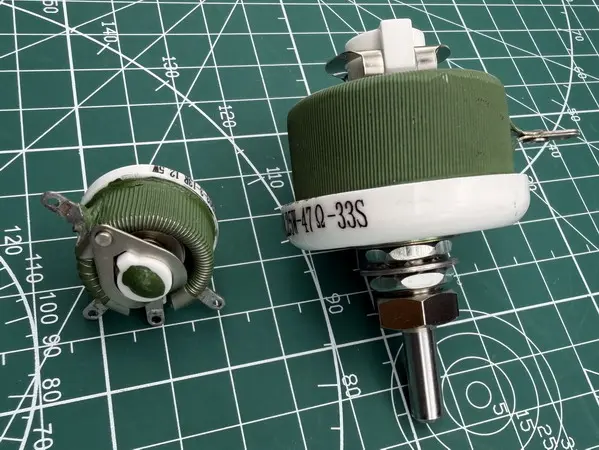
Ceramic and clay-based materials are mainly used for wirewound potentiometers and structures requiring high-temperature resistance and good electrical insulation.
They do not soften or deform at high temperatures in the same way as some plastics, and the raw materials themselves are not particularly expensive.
However, these housings normally require forming, drying, and firing. A certain degree of dimensional shrinkage and deformation may occur, and secondary machining after firing is also relatively difficult.
Whether they are inexpensive still depends on the structure, quantity, and availability of existing tooling.
Ceramic housings are normally fired before the resistive element and other internal components are assembled. The entire potentiometer is not placed in a kiln and fired together.
The most obvious disadvantage of these materials is their brittleness. Their insulation and heat resistance may be excellent, but if the housing is too thin or receives an impact during transportation or assembly, it may still break.
Fiberglass-Reinforced Insulating Housings
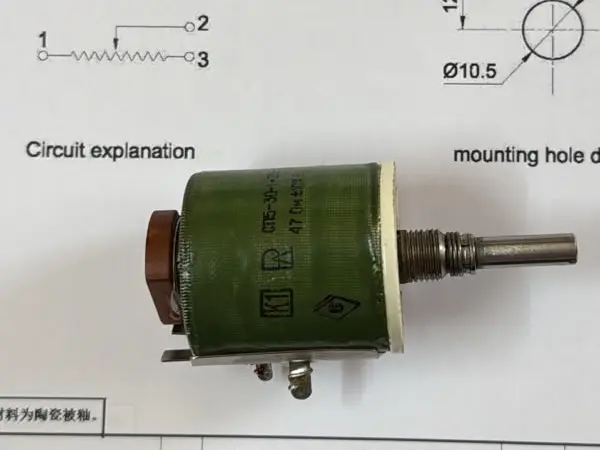
Some older potentiometers use fiberglass-reinforced materials or other insulating composites for their housings.
In one of our recent small-batch reproduction projects, the original product used a fiberglass-reinforced composite housing. Because this old material and manufacturing process had become difficult to organize in small quantities within the current supply chain, we evaluated a clay-based insulating material as an alternative.
This does not mean that ceramic can universally replace fiberglass-reinforced materials.
Clay-based materials provide good insulation and heat resistance, but they are also more brittle. Whether they can be used as a replacement still depends on the specific structure.
When reproducing a product that has been discontinued for many years, what we really need to reproduce is usually not the name of the original material, but the function it performed in the product.
Changing the Housing Material Changes More Than Its Appearance
When changing the housing material of a potentiometer, it is not enough to confirm that the external dimensions remain the same.
The housing may also affect:
- Bushing and bearing retention;
- Positioning of the resistive element;
- Terminal installation;
- Housing grounding;
- Electrical insulation;
- Sealing structure;
- Assembly sequence;
- Mechanical strength of the product.
For example, if a metal housing is replaced with plastic, the original grounding path through the housing may disappear.
If a machined housing is replaced with a stamped housing, the wall thickness, threads, and terminal-retention method may all need to change.
If a relatively tough composite material is replaced with ceramic, the forces applied during assembly must also be reconsidered.
Therefore, a true “one-to-one replacement” does not simply mean reproducing the same color and dimensions. It also means confirming that the original functions remain intact after the substitution.
Quantity Can Directly Change the Housing Solution
The appropriate housing solution is closely related to production quantity.
If only 5 or 10 prototypes are required, machining may have a high unit cost, but it usually avoids the need for complex tooling.
If the long-term demand is several thousand or even tens of thousands of pieces, the upfront cost of stamping, injection-molding, or compression-molding tooling can be distributed across the production quantity.
For the same product, we may propose two different solutions:
- Use a machined housing during the prototype stage;
- Redesign the housing for stamping or injection molding during mass production.
The purpose of the prototype stage is to verify the dimensions, installation, electrical performance, and overall function. Once the requirements have become stable, a decision can be made about whether to invest in production tooling.
The prototype unit price under this approach may not look attractive, but it avoids investing in an unsuitable set of tooling before the structure has been fully confirmed.
A Few Words at the End
The housing material of a potentiometer certainly matters, but we cannot simply compare the prices of one kilogram of stainless steel, one kilogram of aluminum alloy, and one kilogram of Bakelite.
For an actual product, the raw material may account for only a small portion of the total cost. Machining time, tooling investment, order quantity, assembly method, and sealing requirements are often the factors that truly determine the price.
This is especially true when reproducing a discontinued potentiometer whose original materials and manufacturing conditions may no longer be available. For NOL, directly copying the old solution is usually not our first choice.
We prefer to determine which functions the original housing performed and then find a more suitable manufacturing solution based on materials and processes that can now be sourced reliably.