Skip to content
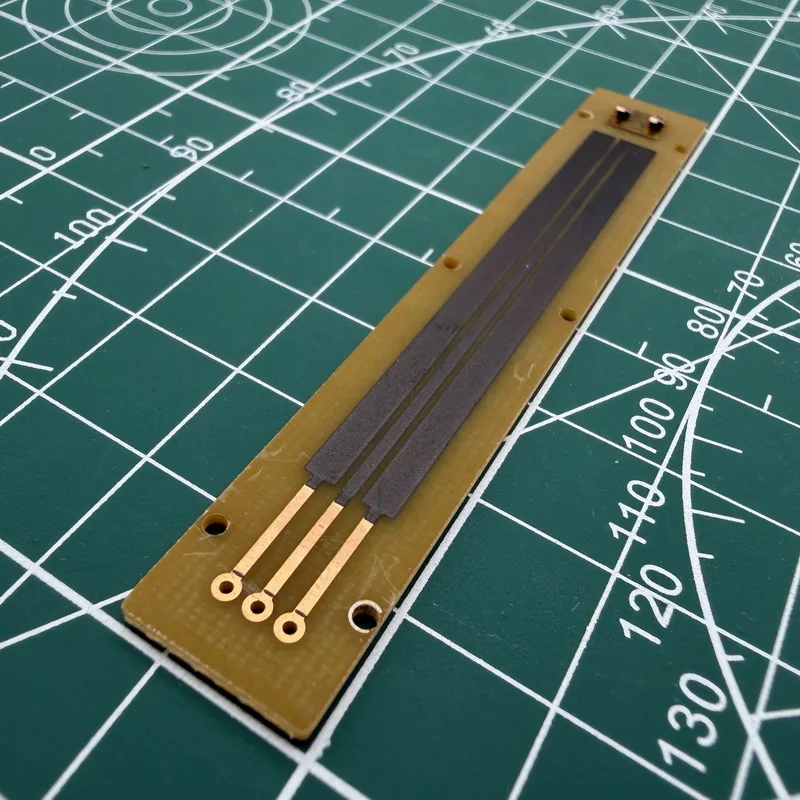
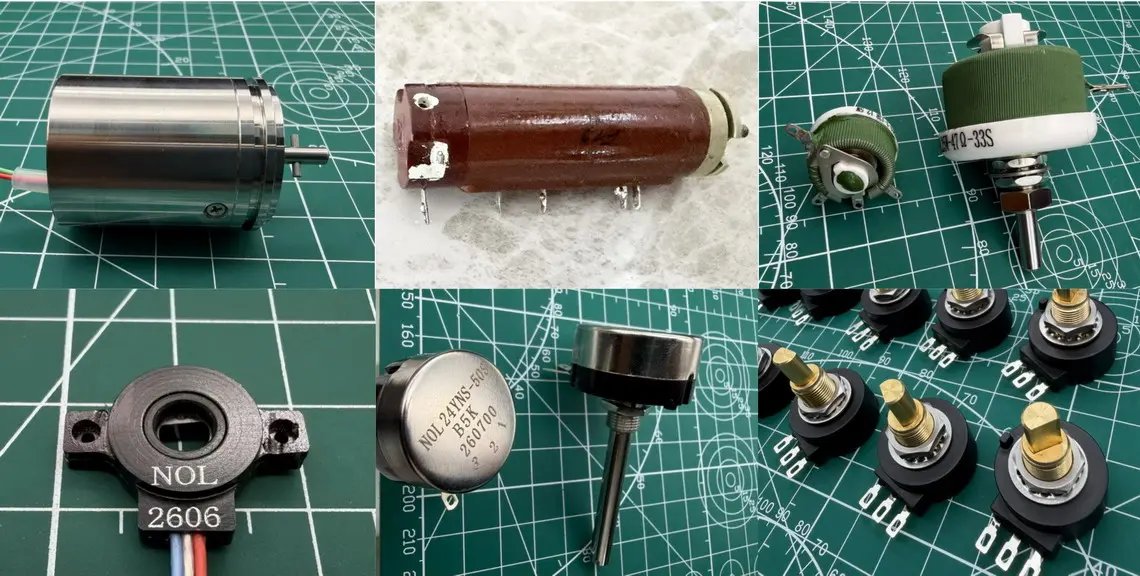
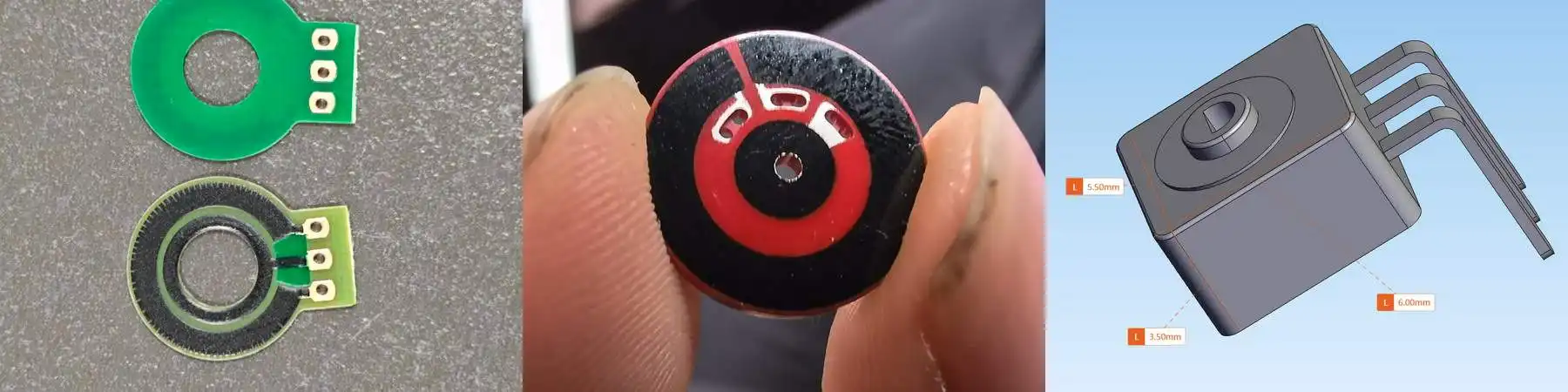
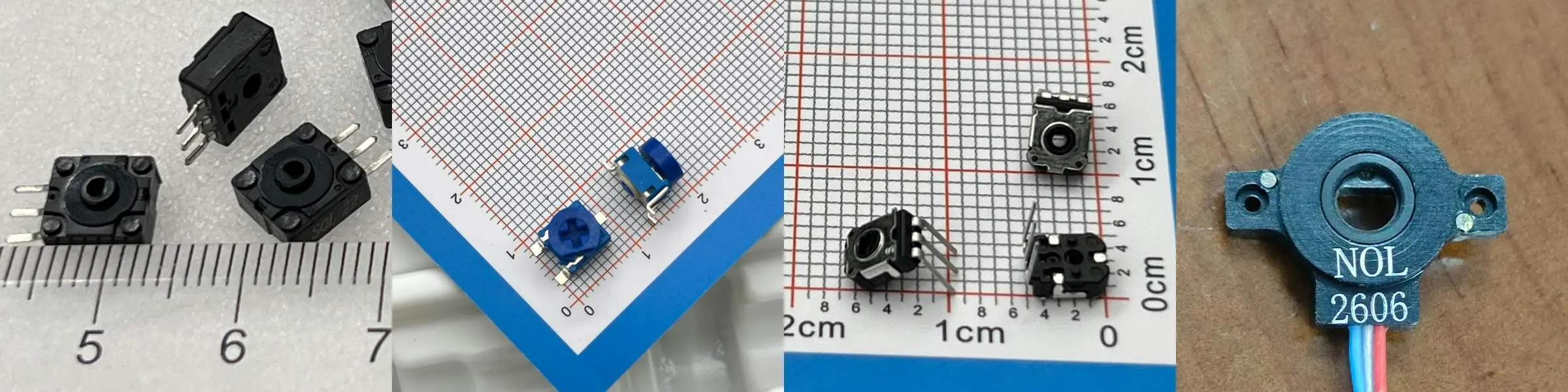
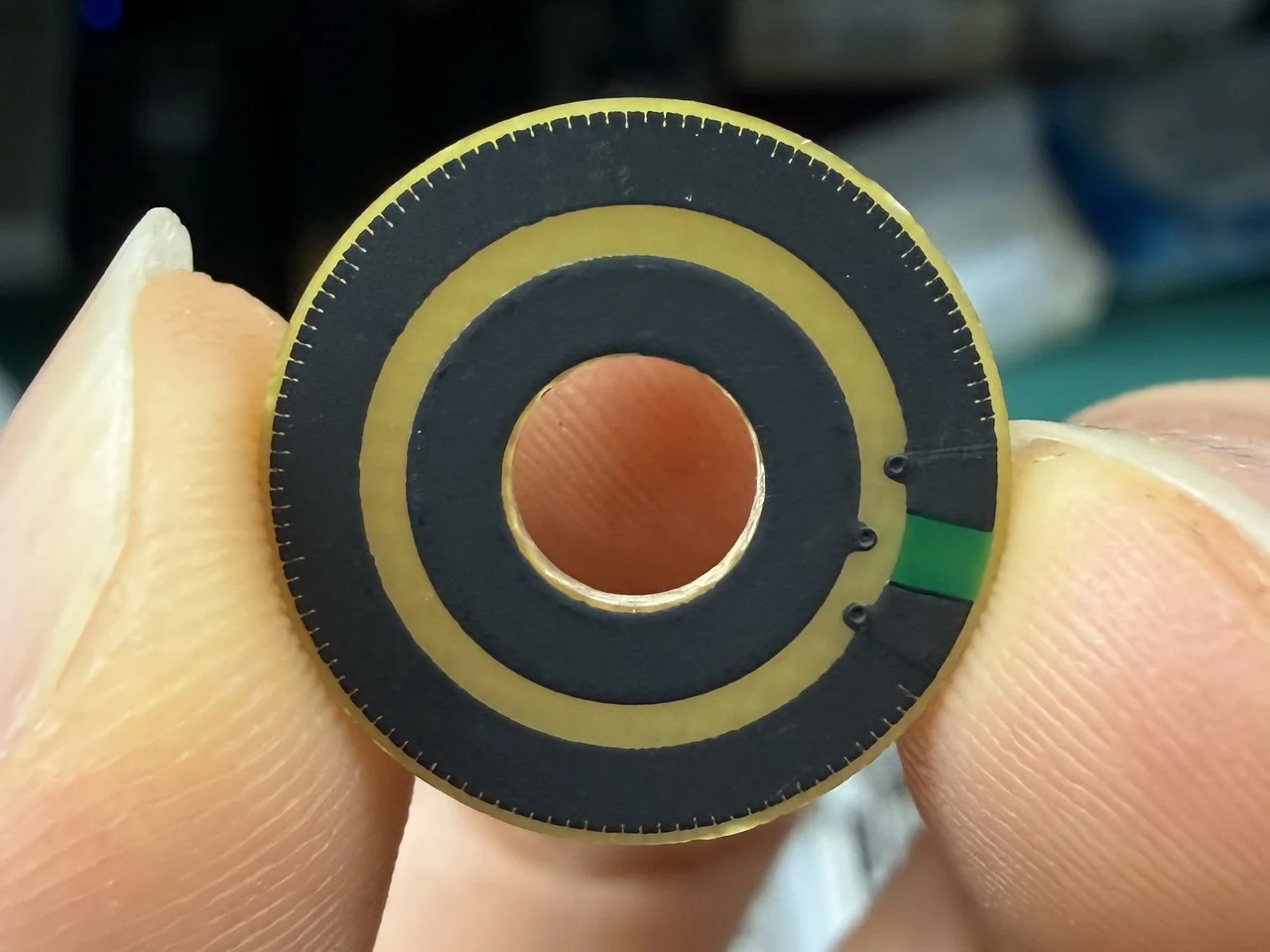
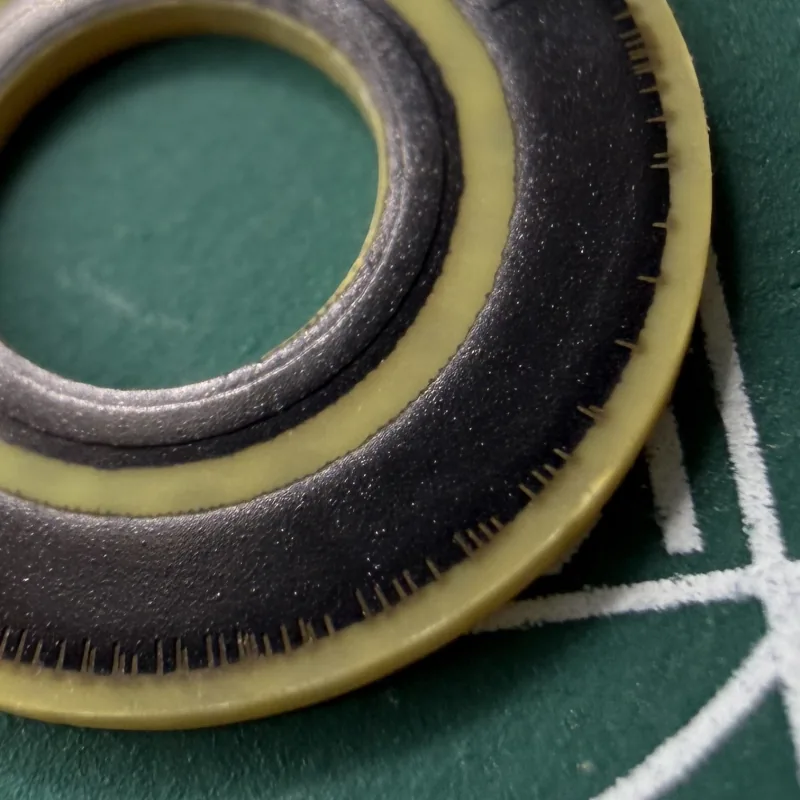
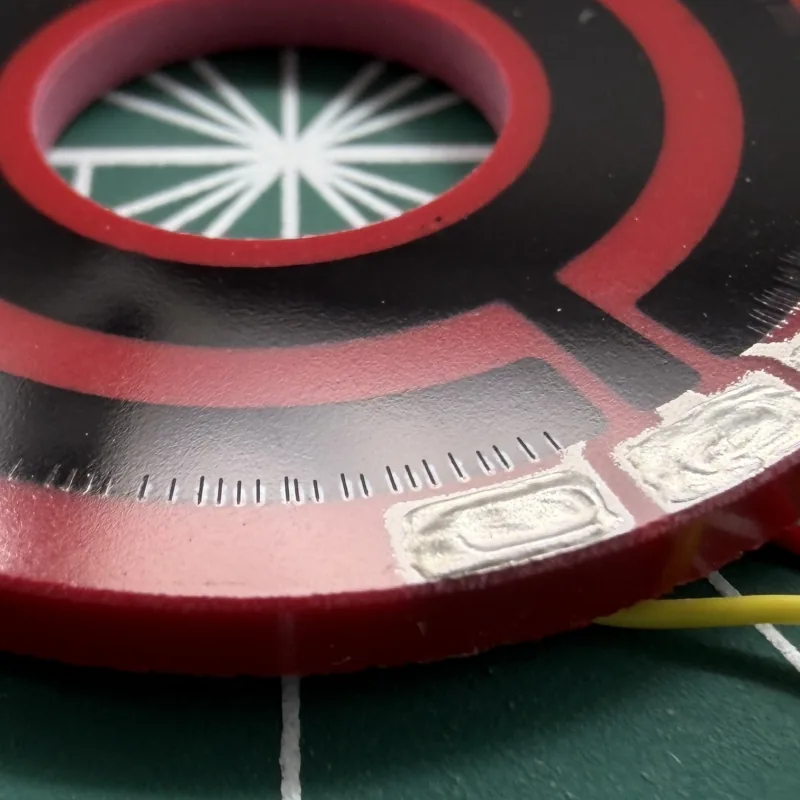
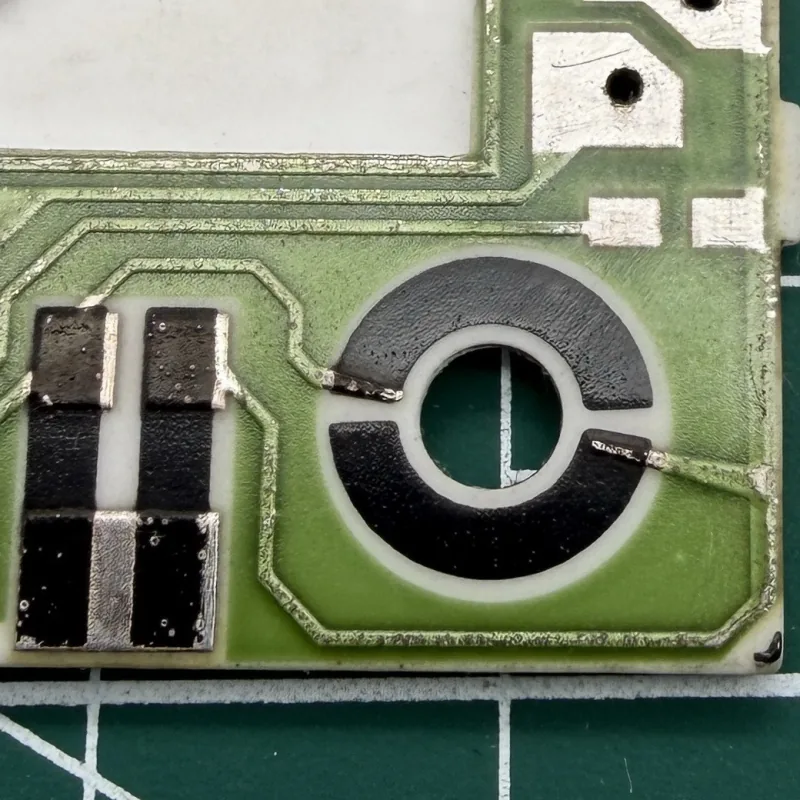
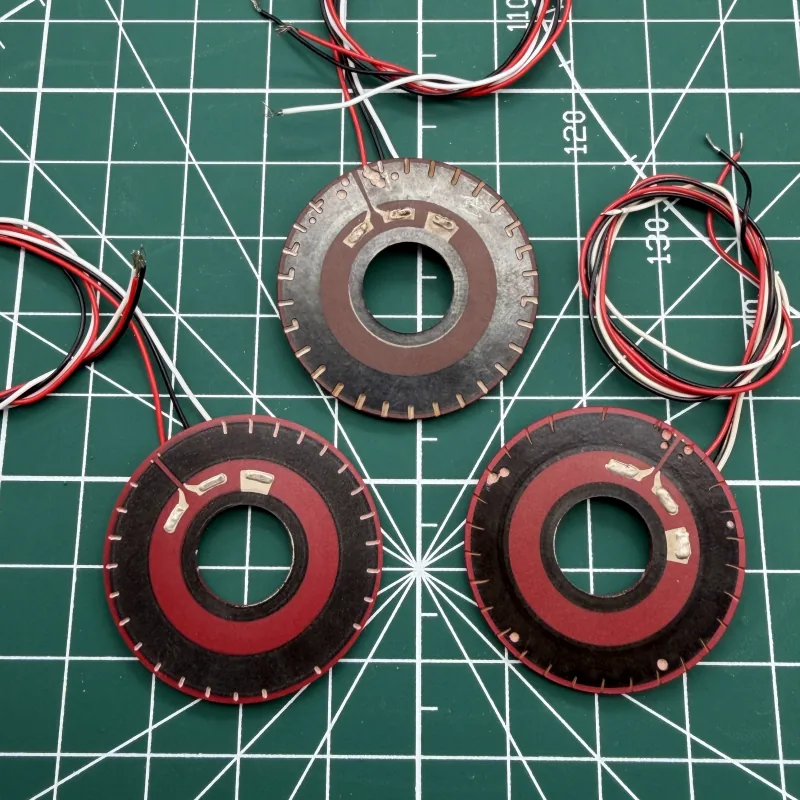
The images in this article are relatively large because the surface details of the resistive elements need to be seen clearly. Also, to be honest, it was more convenient this way—I was too lazy to edit them again and make readers click separate links.
As usual, let’s first organize the three main types of resistive films discussed this time:
【Image 1: Enlarged view of the high-performance carbon film】
【Image 2: Enlarged view of the conductive plastic film】
【Image 3: Enlarged view of the cermet film】
From the detailed images, they are still relatively easy to distinguish.
Introduction
This is an article without a standard answer.
The discussion began because, since early August, we have received more than ten inquiries related to audio applications, including both wipers and potentiometers.
This article is only a discussion by NOL engineers from a manufacturer’s point of view about situations that may occur in real applications. The final answer will only be found in your listening room, not in our office. This is because our manufacturing experience is more focused on industrial and military-grade products, and we have relatively limited experience with audio applications.
However, we can give our conclusion first: if the surface roughness of a high-performance carbon film is properly controlled, and it is used in an audio application together with a precious-metal wire wiper, it may genuinely be the best choice in terms of performance—but it will probably not be the best choice in terms of cost-effectiveness.
First, let’s talk about the characteristics of high-performance carbon film. Many of its properties are actually more suited to military and high-reliability industrial applications. For example, its service life can exceed 2 million cycles, it can withstand temperatures from −55 to +150°C, and its temperature coefficient can be controlled below 400 ppm/°C.
This article contains relatively few parameters, not because I do not have the data, but because many industrial product specifications are somewhat excessive when applied to most commercial applications.
That is why we had the following discussion.
One point must be emphasized first: actual material formulations and manufacturing processes vary between manufacturers, but the conductive systems of the resistive films discussed here all involve carbon or other conductive fillers. The second collector track in a potentiometer is commonly made from a silver conductor.
The track shown in the image may appear black or dark gray, but it still uses a silver conductor. This is the basis of the following discussion. Even a modern conductive plastic film is not simply a piece of plastic completely unrelated to carbon.
Cermet film was eliminated quite early in our discussion because its noise performance in this type of dynamic audio adjustment did not meet our target.
We also do not plan to discuss older conductive plastic film technology here. To be honest, we do not find it particularly attractive, but its surface condition may actually be better suited to audio applications.
Comparison of the Common Characteristics of the Three Materials
The following table only shows general trends. These characteristics do not necessarily apply to every material or every supplier. Final performance is also affected by the film formulation, surface condition, wiper material, wiper pressure, structural precision, and test method.
| Comparison | High-performance carbon film | Conductive plastic film | Cermet film |
|---|---|---|---|
| Typical linearity | Medium to high; trimming can further improve it | Usually high and suitable for precision position feedback | Usually high and suitable for precision adjustment |
| Service life | Standard carbon film has a relatively limited life, while high-performance products can exceed 2 million cycles | Achieving more than 5 million cycles is not uncommon for heavy-duty products, but audio products make trade-offs based on feel, noise, and structure | More commonly used for trimming or occasional adjustment, rather than frequent reciprocating movement |
| Dynamic sliding noise | Can be very low when the surface condition is properly controlled | Not necessarily lower than carbon film; an excessively smooth surface may cause unstable dynamic contact | Does not offer an advantage in the target application discussed here |
| Temperature coefficient | High-performance products can be controlled below 400 ppm/°C | Industrial products can achieve below 200 ppm/°C | Usually better |
| Wear resistance | Average for standard products but significantly better for high-performance versions | Usually good | The film is relatively hard, but that does not mean it is more suitable for frequent sliding |
| Advantages in audio applications | Dynamic contact may be more stable, and its audio performance is worth testing | Linearity, service life, and consistency are relatively easy to balance | No clear advantage was identified in this discussion |
| Disadvantages in audio applications | High-performance products are more expensive, while standard products may wear out first | If the surface is excessively smooth, the actual sliding noise may not be lower | Dynamic sliding noise and operating feel may not be suitable |
The temperature coefficient is not as important in audio applications as it is in industrial measurement or military applications. I thought about it and decided to include it anyway.
An Extreme Discussion About Service Life
Let us first assume an extreme operating environment—for example, the control console in a rock bar. To create certain effects, the DJ moves a fader once every 3–4 seconds, with each movement covering 8–15 mm of the total travel. Here, one movement in one direction is counted as one cycle. The warranty period is assumed to be two years, with seven operating hours per night.
Therefore:
15 movements per minute × 60 minutes × 7 hours × 365 days × 2 years ≈ 4.6 million cycles
Let us leave this number here for now. It is not really scientific, but it represents the upper limit of our thinking.
If you do not believe it, you can try it yourself: continuously move a linear potentiometer back and forth for seven hours—
15 × 60 × 7 ≈ 6,300 movements
See whether your hand starts to cramp, and you will understand.
Many people in the audio industry will probably laugh after reading this calculation. It is indeed a somewhat amusing way to calculate service life: several extreme assumptions are combined to produce a result that looks mathematically correct but is very unlikely to occur in reality.
However, this is something that may genuinely occur in industrial applications.
The difference becomes even clearer when we look at a product designed specifically for professional audio.
The official specification for the TKD CPA-9000/CPA-9100 states that it uses a conductive plastic resistive element and has a minimum sliding life of 100,000 cycles.
It also gives two interesting noise specifications: initial sliding noise below 47 mV and sliding noise below 100 mV after the life test.
A specification such as “below 100 mV after the life test” would not normally appear in the industrial applications that we are familiar with. This very clearly demonstrates that different fields evaluate products according to different requirements.
Our team did something interesting here: we first discussed the issue together and then searched for information to verify our thinking.
The result was obvious—we really do not understand audio very well.
In conventional industrial control applications, if we told a customer, “Your conductive plastic potentiometer only has a service life of 100,000 cycles,” the customer would probably cross mountains and oceans just to come and beat me up.
But this also shows that the service life of an audio product cannot be judged only by its number of operating cycles. Actual frequency of use, movement distance, operating feel, changes in noise, and the way the product is maintained or repaired may all be more meaningful than a maximum service-life figure considered without any real application context.
How Should the Wiper Make Contact?
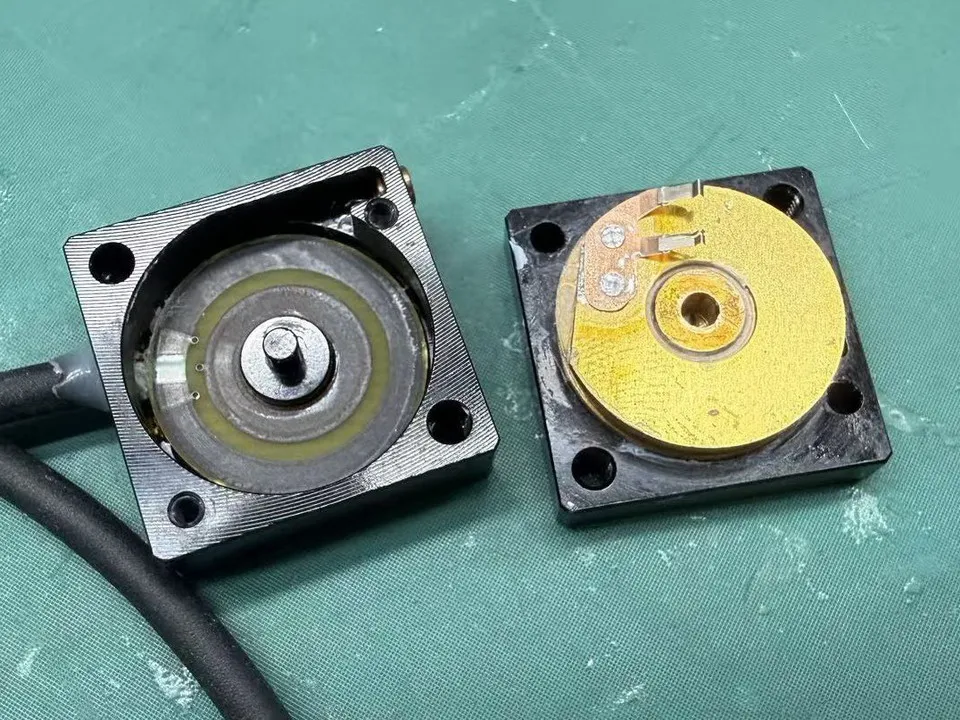
Unlike slow adjustment in industrial control applications and certain applications involving long-term movement in one direction, the wire wiper in an audio fader should use the bent or curved section of the wire as the contact point, rather than making contact directly with the tip.
Vishay has used spherical contacts in some extremely high-life applications—some specifications indicate a service life of more than 30 million cycles. We will not go into too much detail here.
According to our experience, the output noise of this type of contact may change significantly during the middle and later stages of its service life. Therefore, this contact method is also relatively uncommon in the modern industrial applications that we have encountered.
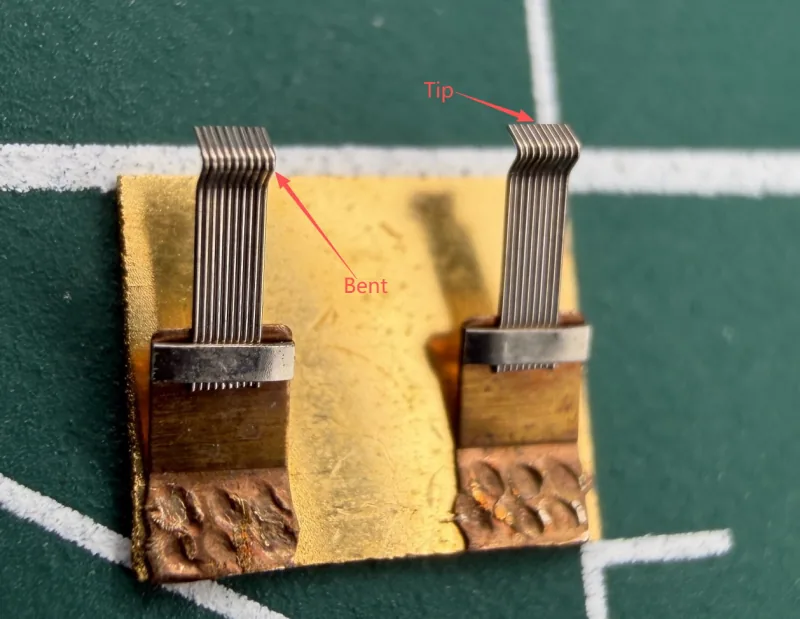
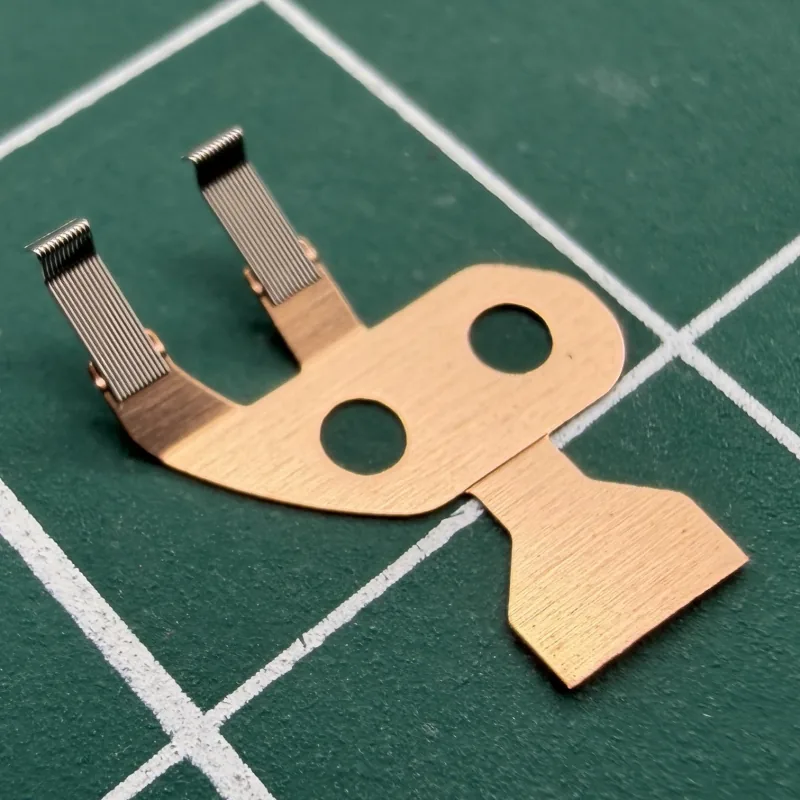
One more thing: audio designers should not directly copy the wiper shown above, which we used only to demonstrate the contact position.
It is too rigid. Its base material has almost no elasticity, so all assembly stress is concentrated on the precious-metal wires. This structure is suitable for certain heavy-industrial or aerospace applications, but audio applications are better suited to a wiper with a thin beryllium-copper base, as shown below.
A Discussion Based on Noise
Noise is discussed separately because the final purpose of audio adjustment is to serve human listeners, not mechanical equipment.
Here, we are discussing an application without a VCA or filter, where the audio signal passes directly through the resistive track. The comparison concerns the audible “scratching” noise produced while the fader is moving.
After cermet film, the second material we eliminated because of noise was, surprisingly, the modern conductive plastic film.
Take another look at the detailed images at the beginning of this article—the new conductive plastic film is extremely smooth. Because it is so smooth, it may actually produce higher dynamic contact noise. This was a result that none of us expected beforehand.
In our comparison test, using the same assembly stress and the same wiper specification, the modern conductive plastic film produced dynamic noise of approximately 100 mV, while the modern carbon film measured approximately 50 mV.
It must be emphasized that this was only a comparison under the same set of test conditions. It cannot be used to conclude that all carbon films are quieter than all conductive plastic films. Instead, it reminds us that dynamic noise is determined not only by the material name, but also by the film surface, wiper shape, contact pressure, and other factors.
Under these conditions, a high-quality carbon film may indeed make it easier to achieve lower actual sliding noise than a conductive plastic film. However, the reason is not simply that “carbon film has lower material noise.” Its surface condition may make it easier to maintain stable dynamic contact.
We currently have the following theory regarding surface roughness:
-
When the surface has an appropriate microscopic roughness, the wire wiper forms multiple micro-contact points;
-
These micro-contact points are continuously established and released during movement, but they do not all lose contact at the same time;
-
As a result, the overall contact resistance may actually remain more stable;
-
If the surface is excessively smooth, the actual contact may become concentrated in only a few areas. Small vibrations, contaminants, or changes in contact pressure may then be more likely to cause resistance fluctuations.
For now, this explanation should be regarded as our engineering hypothesis rather than a conclusion that applies to all materials. It still needs to be verified using an actual audio circuit, the same mechanical structure, and the same test method.
Why Not Use Standard Carbon Film?
Standard carbon film can certainly be used in an audio potentiometer.
The problem is that, under frequent adjustment, standard carbon film often begins to wear first, followed by changes in noise and resistance. The designed service life of many ordinary audio control potentiometers may not exceed 50,000 cycles, but in reality, most people do not adjust them thousands of times every day.
Therefore, although the designed service life may appear short, the product may actually last a very long time in real life.
This is also why we cannot judge a product simply by the labels “carbon film” or “conductive plastic.” Standard carbon film, high-performance carbon film, and conductive plastic films with different formulations are not products of the same performance level.
Final Thoughts
There is nothing embarrassing about a group of people who have spent years working with industrial products sitting down to discuss applications in the commercial audio field.
It means that, over the coming period, NOL will gradually enter this field with the help of some professional customers.
Perhaps we cannot compete with the major brands in producing complete audio equipment. But if we can manufacture the resistive elements, wipers, and potentiometer components well, that would also make us very happy.