Skip to content

Potentiometers
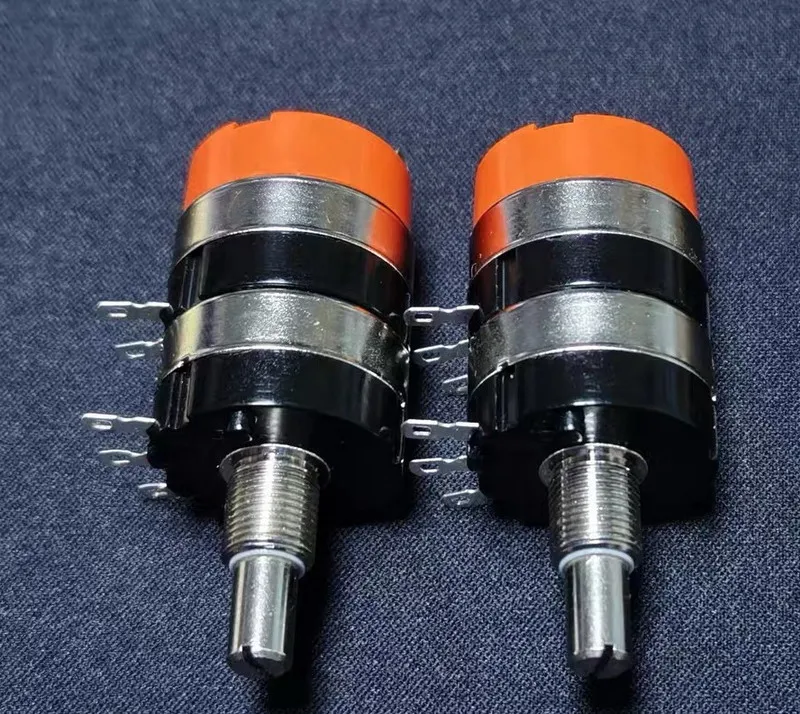
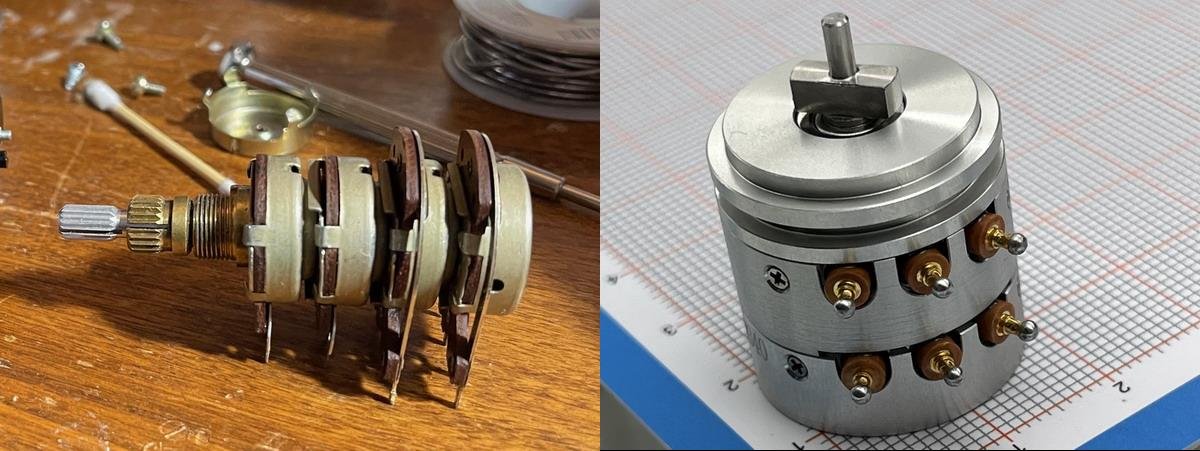
The formal name for a potentiometer is "variable resistor" or "rheostat." It is an electronic component where the final resistance value changes due to the movement of the wiper on the carbon film surface, either linearly or in an arc.
The uniform resistance of the film does not change. When the position of the wiper changes, its central axis angle also changes, and the resistance varies with the relative position of the axis and the wiper .
The maximum or minimum resistance of a potentiometer does not change and is fixed. The resistance between pins 2-3 or 1-2 changes with the rotation angle of the axis. The resistance between pins 1-3 is the total resistance, which is fixed and does not change. The output resistance of the potentiometer changes with the rotation of the axis, and the resistance between pins 1-2 or 2-3 changes in proportion to the rotation angle. This relationship is what we commonly refer to as "linearity" (only for linear B-type output). Standard potentiometers do not have strict linearity requirements, with general linearity tolerance being ±3~4%.
Sensors (Derivative Products)
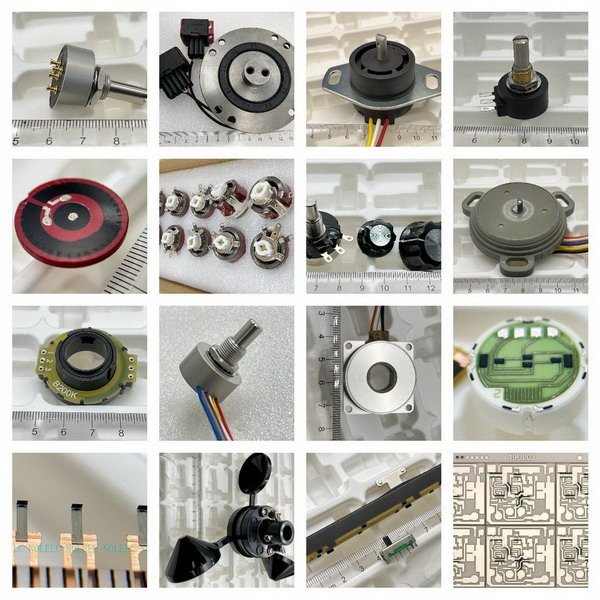
A sensor can be understood as a device that transmits a signal from one position to another within a system or converts a signal at one position into another signal through certain techniques for transmission to another position. There are many types of sensors, but we will focus on angle position sensors, which belong to the category of "potentiometers" we discussed earlier.
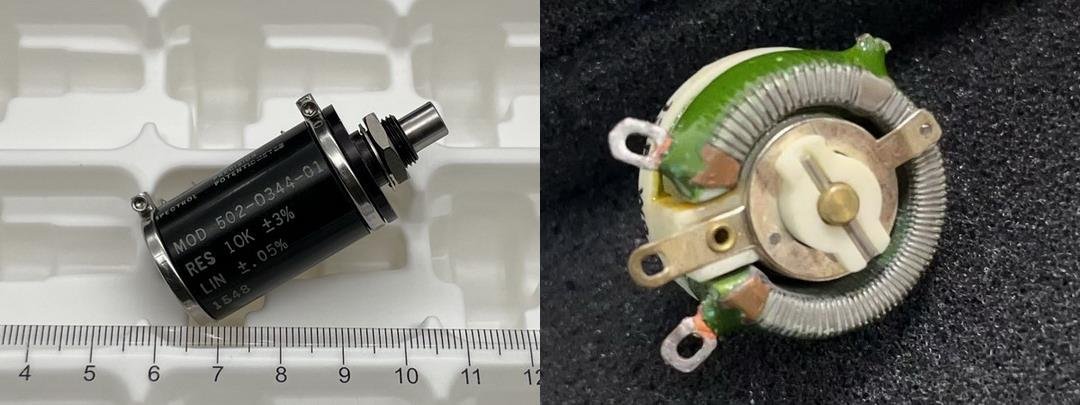
An angle position sensor is essentially a potentiometer (variable resistor, variable potentiometer) processed with special techniques. This means the angle position sensor is a potentiometer with a linearity of ±0.05%~1%, an electrical lifespan of 1 million to 10 million cycles, smoothness of 0.2, and backlash within 1°. Naturally, the requirements for angle position sensors are higher than those for potentiometers; for example, they must have low torque, use precious metal brushes or hexalloy brushes, and the film in contact with the brush must be made of conductive plastic or superconducting film.
Comparison in Cost-Effectiveness
The cost-effectiveness of potentiometers and sensors differs significantly because the parameters of potentiometers are often inferior to those of sensors. Therefore, when you encounter potentiometer-related products with linearity requirements of ±0.25% and an electrical lifespan above 1 million cycles, you should understand these as higher-level products. Although they are derivative products of potentiometers, there are significant differences in raw materials and processing techniques.