Skip to content

Summary: This article discusses the working principle of sliding rheostats and then explains the simple classification methods of potentiometers derived from the final voltage and current changes.
Before classification, let's understand the working principle of sliding rheostats together. Because variable resistors can output different voltages or currents, forming corresponding control or feedback signals, a seemingly simple device is widely used in various aspects of our lives. From audio systems to airplanes and ships, from ground vehicles to spacecraft, almost all control systems use this simple device prototype: sliding rheostats (with an emphasis on the adjustability of the resistance value).
Its working principle is as follows: Terminals A and B have fixed voltage or resistance values, and the final output of different currents or voltages is determined by the position change of terminal P in combination with point A or B.
Various sensors, encoders, and actuators derived later may not adopt this structure as a prototype, but the final control output method is still obtained through changes in current or voltage.
After understanding the above principles, let's start with the simple classification of potentiometers:
Structural Classification:
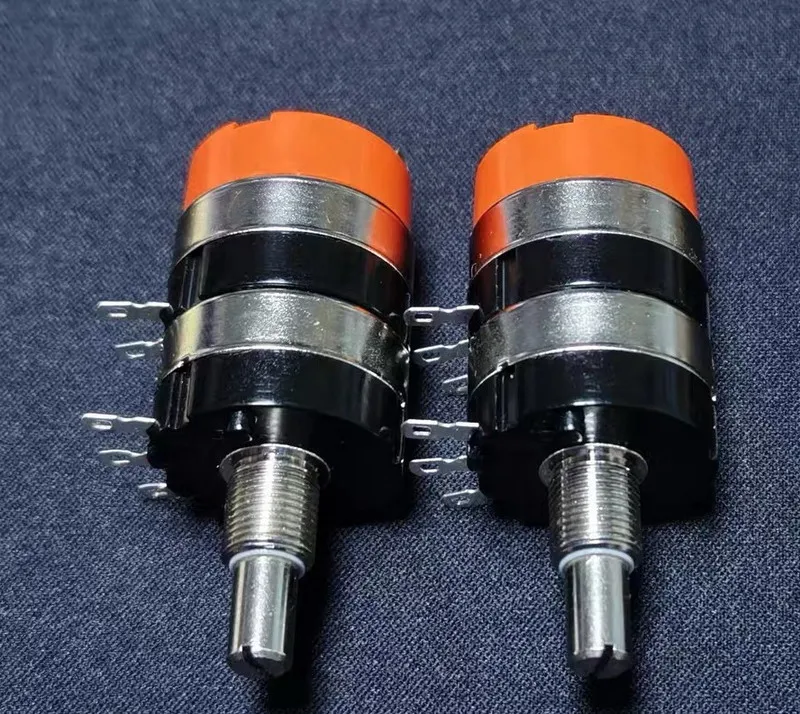
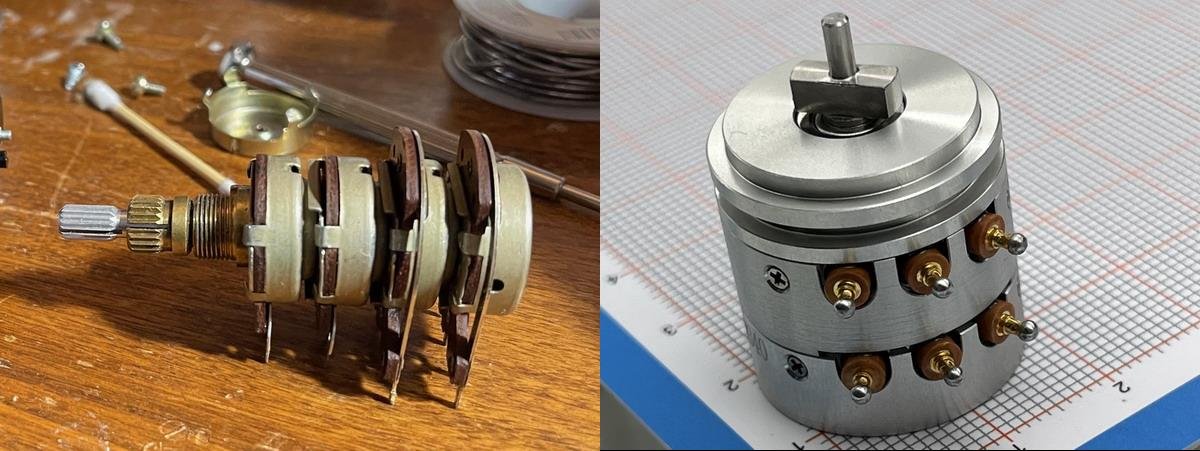
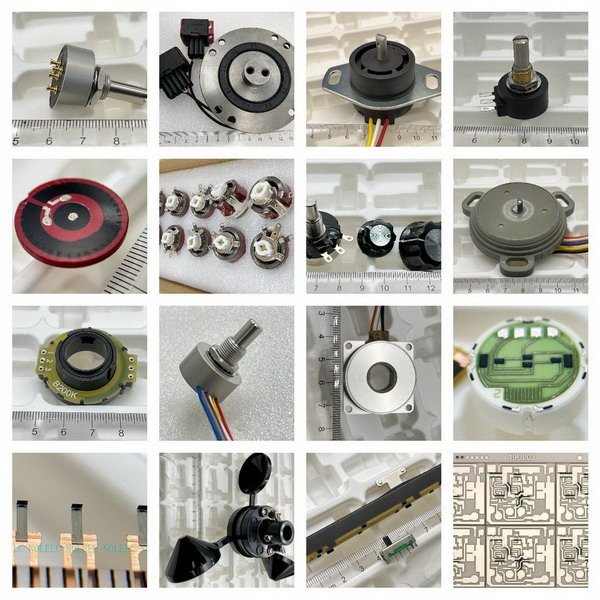
- Rotary: Such as audio volume knobs, servo angle sensors, wind direction sensors, automobile throttle position sensors, etc.
- Sliding: Such as mixers, linear sensors, medical infusion pump sensors, etc.
Material Classification (mainly resistor materials):
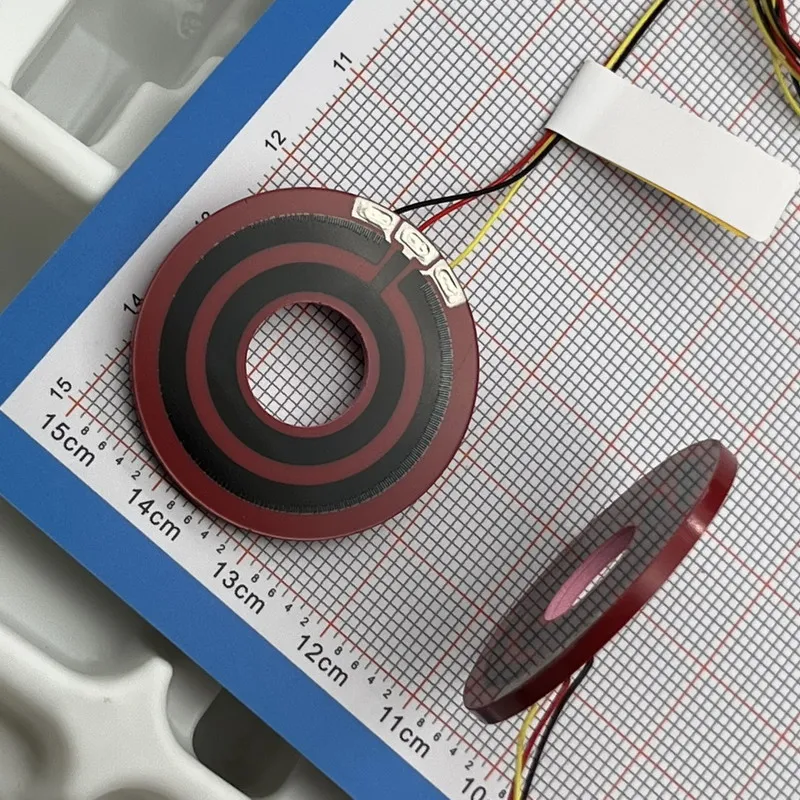
- Carbon Film Potentiometers
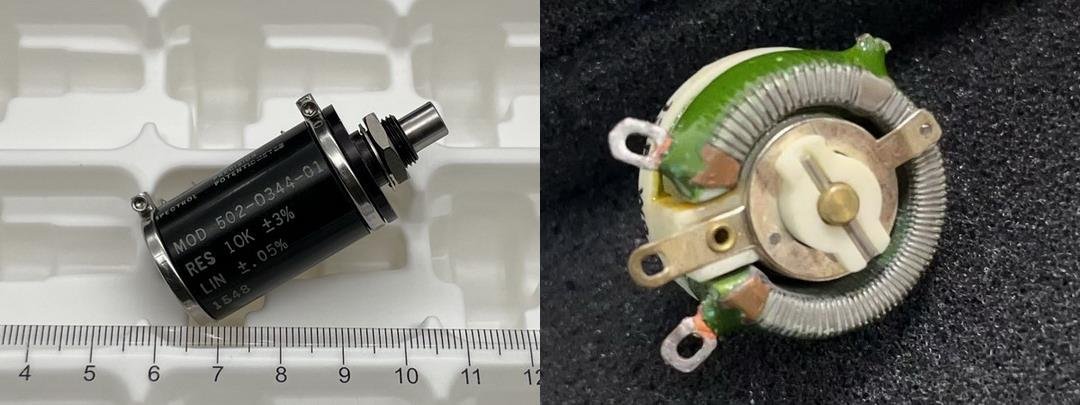
- Ceramic Printed Potentiometers
- Metal Film Printed Potentiometers
- Conductive Plastic Film Potentiometers
Performance Classification: This relates to the specific requirements of the user, such as:
- Long-life Potentiometers
- Potentiometers suitable for special environments (such as high temperatures, corrosive liquids, etc.)
The above classification methods help beginners better understand the types of potentiometers and their application scenarios.